


The star has donated the complete sum of his £25,000 Mercury Prize winnings to the trust for venues, which works to protect the UK's small concert spaces.
The star was awarded the prize on mid-October as his latest record the album was chosen as the best record of the previous year.
He has decided to give the cash to the Music Venues Trust, in recognition of the essential function small stages fulfilled in his early career.
"I couldn't be pursuing my current career if it wasn't for all the shows I performed around the region, and beyond, when I was just getting going," said the artist. "These spaces are legendary, but they are in difficulty."
Since the start of 2023, at least 150 of these spaces have ceased operations – approximately 16 percent of the entire UK sector.
In the last year, top acts including Pulp, the group Coldplay, Katy Perry and Ed Sheeran have all backed the Music Venues Trust in its efforts to help venues survive, by adding a small levy to their admission fees, which goes to help smaller concert halls.
Sam Fender also took part, raising in excess of £100,000 on his live tour to help numerous local spots across the UK.
These funds supported locations that were confronting possible closure due to issues caused by water damage, fires and personal losses, as well as regulatory hurdles, legal disputes and sound issues.
Other venues were granted monetary aid in modernizing infrastructure and sound and lighting systems that positively impacted musicians and audiences.
"The notion that money from shows in big venues helps the smaller venues, where it kicks off for artists like me, is just common sense," the star has commented.
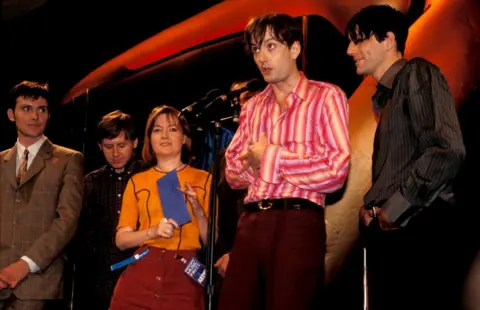
He is not the first artist to donate his Mercury Prize prize money to good deeds.
Back when they won the award in 1996 for their record Different Class, vocalist Jarvis Cocker announced that the group would donate their winnings to the non-profit War Child.
In 2002, rapper and singer Ms Dynamite divided her bounty between multiple charities, such as the children's charity and a Sickle Cell organization.
"I also donated a thousand pounds to the center, to their gymnastics program, because I trained in gymnastics when I was a child and they required updated gear," the artist explained to a publication.
In recent years, they contributed their winnings to the local youth club that developed their group, in addition to other independent music bodies.
Also winners that year they gave their prize to a MS organization after a friend was diagnosed the illness.
"The victory was ample," said singer Small. "The prize was the bonus but we could do without the cherry, because we had the main prize. So our winning impacted somebody else's life."
In the past week, the trust shared it had saved a couple of small stages in that region, by bringing them into community ownership.
The first in that area and the other in Bristol were bought under the public acquisition scheme, which is funded by Arts Council England and supporters who acquire "stakes" in the buildings.


